
Premium Phosphosite-Specific 7TM Antibodies
Your Resource for GPCR Research
Select Your Country of Delivery below

Somatostatin Receptor 3 Antibodies

Close filters
No results were found for the filter!
Citations
mSST3 (non-phospho), Somatostatin Receptor 3 Antibody (Mouse)
mSST3 (non-phospho), Somatostatin Receptor 3...
The non-phospho-SST3 receptor antibody is directed against the distal end of the carboxyl-terminal tail of human SST3. In can be used to detect total SST3 receptors in Western blots independent of phosphorylation. The non-phospho-SST3...
CHF400.00 *
Citations
KO-Validated
Immunohistochemical identification of Somatostatin Receptor 3 in neuronal cilia.
mSST3 (IHC-grade), Somatostatin Receptor 3...
The mouse SST3 antibody is directed against the distal end of the carboxyl-terminal tail of mouse and rat Somatostatin Receptor 3. It can be used to detect total SST3 receptors in Western blots independent of phosphorylation. The SST3...
CHF400.00 *
Rabbit Monoclonal
KD-Validated
NEW
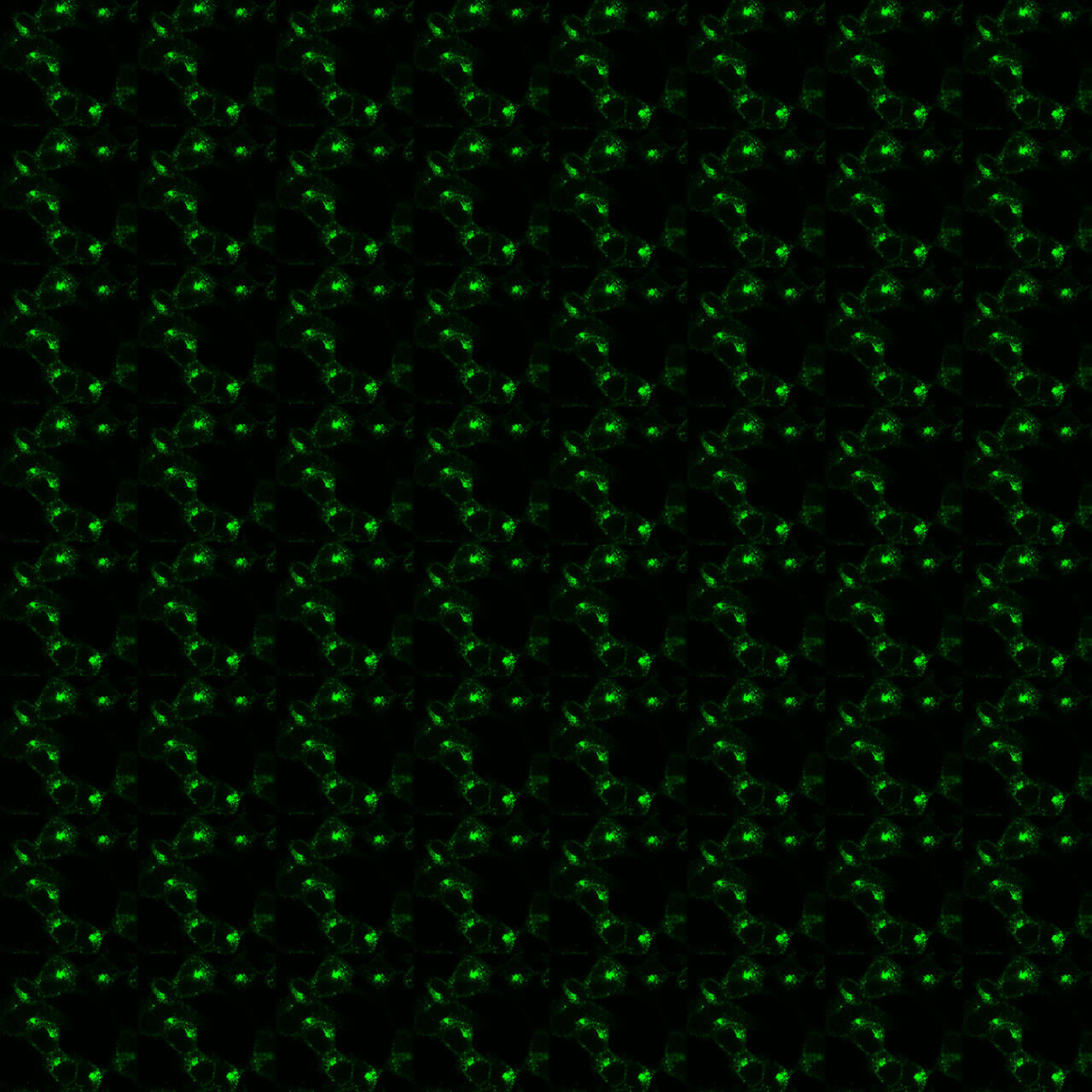
Validation of the Somatostatin Receptor 3 in transfected HEK293 cells.
SST3 [UMB5] (RM-non-phospho), Somatostatin...
The non-phospho-SST3 receptor antibody is directed against the distal end of the carboxyl-terminal tail of human SST3. In can be used to detect total SST3 receptors in Western blots independent of phosphorylation. The non-phospho-SST3...
CHF495.00 *
Rabbit Monoclonal
KD-Validated
NEW
Immunohistochemical identification of Somatostatin Receptor 3 in human growth-hormone-producing pituitary adenoma tissue.
SST3 [UMB5] (RM-IHC-grade), Somatostatin...
The SST3 receptor antibody is directed against the distal end of the carboxyl-terminal tail of human Somatostatin Receptor 3. In can be used to detect total SST3 receptors in Western blots independent of phosphorylation. The SST3...
CHF495.00 *
Citations
SST3 (IHC-grade), Somatostatin Receptor 3 Antibody
The SST3 receptor antibody is directed against the distal end of the carboxyl-terminal tail of human Somatostatin Receptor 3. In can be used to detect total SST3 receptors in Western blots independent of phosphorylation. The SST3...
CHF400.00 *
Citations
SST3 (non-phospho), Somatostatin Receptor 3 Antibody
SST3 (non-phospho), Somatostatin Receptor 3...
The non-phospho-SST3 receptor antibody is directed against the distal end of the carboxyl-terminal tail of human SST3. In can be used to detect total SST3 receptors in Western blots independent of phosphorylation. The non-phospho-SST3...
CHF400.00 *
Citations
pT348-SST3 (phospho-Somatostatin Receptor 3 Antibody)
pT348-SST3 (phospho-Somatostatin Receptor 3...
Threonine348 (T348) is a major phosphorylation site of the somatostatin receptor 3 (SST3). The pT348-SST3 antibody detects phosphorylation in response to high- and low-efficacy agonists but not after PKC activation. T348 phosphorylation...
CHF400.00 *
Citations
pS337/pT341-SST3 (phospho-Somatostatin Receptor 3 Antibody)
pS337/pT341-SST3 (phospho-Somatostatin Receptor...
Serine337/Threonine341 (S337/T341) is a major phosphorylation site of the somatostatin receptor 3 (SST3). The pS337/pT341-SST3 antibody detects phosphorylation in response to high- and low-efficacy agonists but not after PKC activation....
CHF400.00 *
Citations
Agonist-induced Serine361 phosphorylation of the Somatostatin Receptor 3
pS361-SST3 (phospho-Somatostatin Receptor 3...
Serine361 (T361) is a major phosphorylation site of the somatostatin receptor 3 (SST3). The pS361-SST3 antibody detects phosphorylation in response to high- and low-efficacy agonists but not after PKC activation. S361 phosphorylation is...
CHF400.00 *
SST3

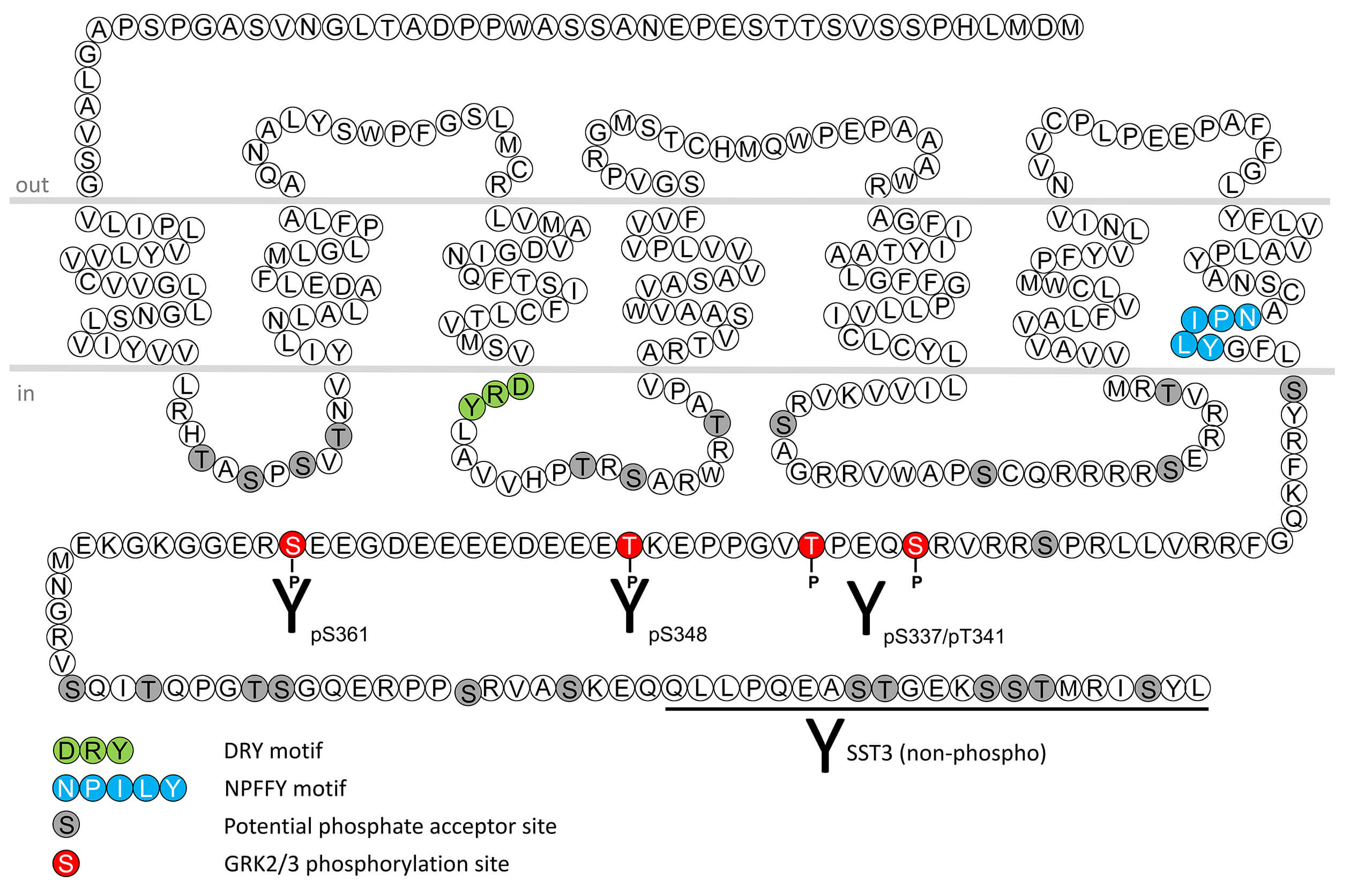
The somatostatin receptor subtype 3 (SST3, SSTR3) is a class A G protein-coupled receptor (GPCR) that is activated by the endogenous peptides somatostatin-14 and somatostatin-28. SST3 primarily couples to Gi/o proteins, resulting in inhibition of adenylyl cyclase, decreased intracellular cAMP production, modulation of ion channels, and activation of intracellular signaling pathways including MAPK and PI3K/Akt. Unlike the other somatostatin receptor subtypes, SST3 is highly enriched in the primary cilia of many neurons and epithelial cells, where it functions as a sensory signaling receptor. SST3 is expressed in the cerebral cortex, hippocampus, hypothalamus, kidney, pancreas, and gastrointestinal tract, and is also detected in several endocrine and neuroendocrine tumors. Functionally, SST3 contributes to the regulation of neurotransmission, cognition, memory, cell proliferation, apoptosis, and ciliogenesis, and accumulating evidence suggests an important role in maintaining primary cilium function and cellular homeostasis. Several subtype-selective SST3 agonists, including L-796,778 and BIM-23056, have been developed as experimental pharmacological tools to investigate SST3 biology, but none has advanced to clinical use. Currently approved somatostatin analogs such as octreotide, lanreotide, and pasireotide exhibit only moderate affinity for SST3, and no SST3-selective drug has yet been approved for therapeutic applications. The SST3 receptor is unique among somatostatin receptors in that it exhibits a very long intracellular carboxyl-terminal tail. SST3 desensitization, β-arrestin recruitment and internalization are entirely regulated by phosphorylation of phosphate acceptor sites in the proximal portion of its carboxyl-terminal tail including serine337/threonine341 (pS337/pT341-SST3) and threonine348 (pT348-SST3). This nomenclature refers to the human SST3. Agonist-induced phosphorylation of S337/T341 and T348 is mediated by GRK2 and GRK3. SST3 dephosphorylation is primarily mediated by protein phosphatases 1 alpha and beta (PP1α/β). For more information on SST3 pharmacology please refer to the IUPHAR database. For further reading refer to:

Lehmann A, Kliewer A, Günther T, Nagel F, Schulz S. Identification of Phosphorylation Sites Regulating sst3 Somatostatin Receptor Trafficking. Mol Endocrinol. 2016 Jun;30(6):645-59. doi: 10.1210/me.2015-1244. Epub 2016 Apr 21. PubMed PMID: 27101376; PubMed Central PMCID: PMC5414643.

Kliewer A, Mann A, Petrich A, Pöll F, Schulz S. A transplantable phosphorylation probe for direct assessment of G protein-coupled receptor activation. PLoS One. 2012;7(6):e39458. doi: 10.1371/journal.pone.0039458. Epub 2012 Jun 26. PubMed PMID: 22745760; PubMed Central PMCID: PMC3383726.

Tulipano G, Stumm R, Pfeiffer M, Kreienkamp HJ, Höllt V, Schulz S. Differential beta-arrestin trafficking and endosomal sorting of somatostatin receptor subtypes. J Biol Chem. 2004 May 14;279(20):21374-82. Epub 2004 Mar 4. PubMed PMID: 15001578.

The somatostatin receptor subtype 3 (SST3, SSTR3) is a class A G protein-coupled receptor (GPCR) that is activated by the endogenous peptides somatostatin-14 and somatostatin-28. SST3... read more »
Close window
Somatostatin Receptor 3 Antibodies

SST3

The somatostatin receptor subtype 3 (SST3, SSTR3) is a class A G protein-coupled receptor (GPCR) that is activated by the endogenous peptides somatostatin-14 and somatostatin-28. SST3 primarily couples to Gi/o proteins, resulting in inhibition of adenylyl cyclase, decreased intracellular cAMP production, modulation of ion channels, and activation of intracellular signaling pathways including MAPK and PI3K/Akt. Unlike the other somatostatin receptor subtypes, SST3 is highly enriched in the primary cilia of many neurons and epithelial cells, where it functions as a sensory signaling receptor. SST3 is expressed in the cerebral cortex, hippocampus, hypothalamus, kidney, pancreas, and gastrointestinal tract, and is also detected in several endocrine and neuroendocrine tumors. Functionally, SST3 contributes to the regulation of neurotransmission, cognition, memory, cell proliferation, apoptosis, and ciliogenesis, and accumulating evidence suggests an important role in maintaining primary cilium function and cellular homeostasis. Several subtype-selective SST3 agonists, including L-796,778 and BIM-23056, have been developed as experimental pharmacological tools to investigate SST3 biology, but none has advanced to clinical use. Currently approved somatostatin analogs such as octreotide, lanreotide, and pasireotide exhibit only moderate affinity for SST3, and no SST3-selective drug has yet been approved for therapeutic applications. The SST3 receptor is unique among somatostatin receptors in that it exhibits a very long intracellular carboxyl-terminal tail. SST3 desensitization, β-arrestin recruitment and internalization are entirely regulated by phosphorylation of phosphate acceptor sites in the proximal portion of its carboxyl-terminal tail including serine337/threonine341 (pS337/pT341-SST3) and threonine348 (pT348-SST3). This nomenclature refers to the human SST3. Agonist-induced phosphorylation of S337/T341 and T348 is mediated by GRK2 and GRK3. SST3 dephosphorylation is primarily mediated by protein phosphatases 1 alpha and beta (PP1α/β). For more information on SST3 pharmacology please refer to the IUPHAR database. For further reading refer to:

Lehmann A, Kliewer A, Günther T, Nagel F, Schulz S. Identification of Phosphorylation Sites Regulating sst3 Somatostatin Receptor Trafficking. Mol Endocrinol. 2016 Jun;30(6):645-59. doi: 10.1210/me.2015-1244. Epub 2016 Apr 21. PubMed PMID: 27101376; PubMed Central PMCID: PMC5414643.

Kliewer A, Mann A, Petrich A, Pöll F, Schulz S. A transplantable phosphorylation probe for direct assessment of G protein-coupled receptor activation. PLoS One. 2012;7(6):e39458. doi: 10.1371/journal.pone.0039458. Epub 2012 Jun 26. PubMed PMID: 22745760; PubMed Central PMCID: PMC3383726.

Tulipano G, Stumm R, Pfeiffer M, Kreienkamp HJ, Höllt V, Schulz S. Differential beta-arrestin trafficking and endosomal sorting of somatostatin receptor subtypes. J Biol Chem. 2004 May 14;279(20):21374-82. Epub 2004 Mar 4. PubMed PMID: 15001578.

Recently viewed