M3 Muscarinic Acetylcholine Receptor Antibodies
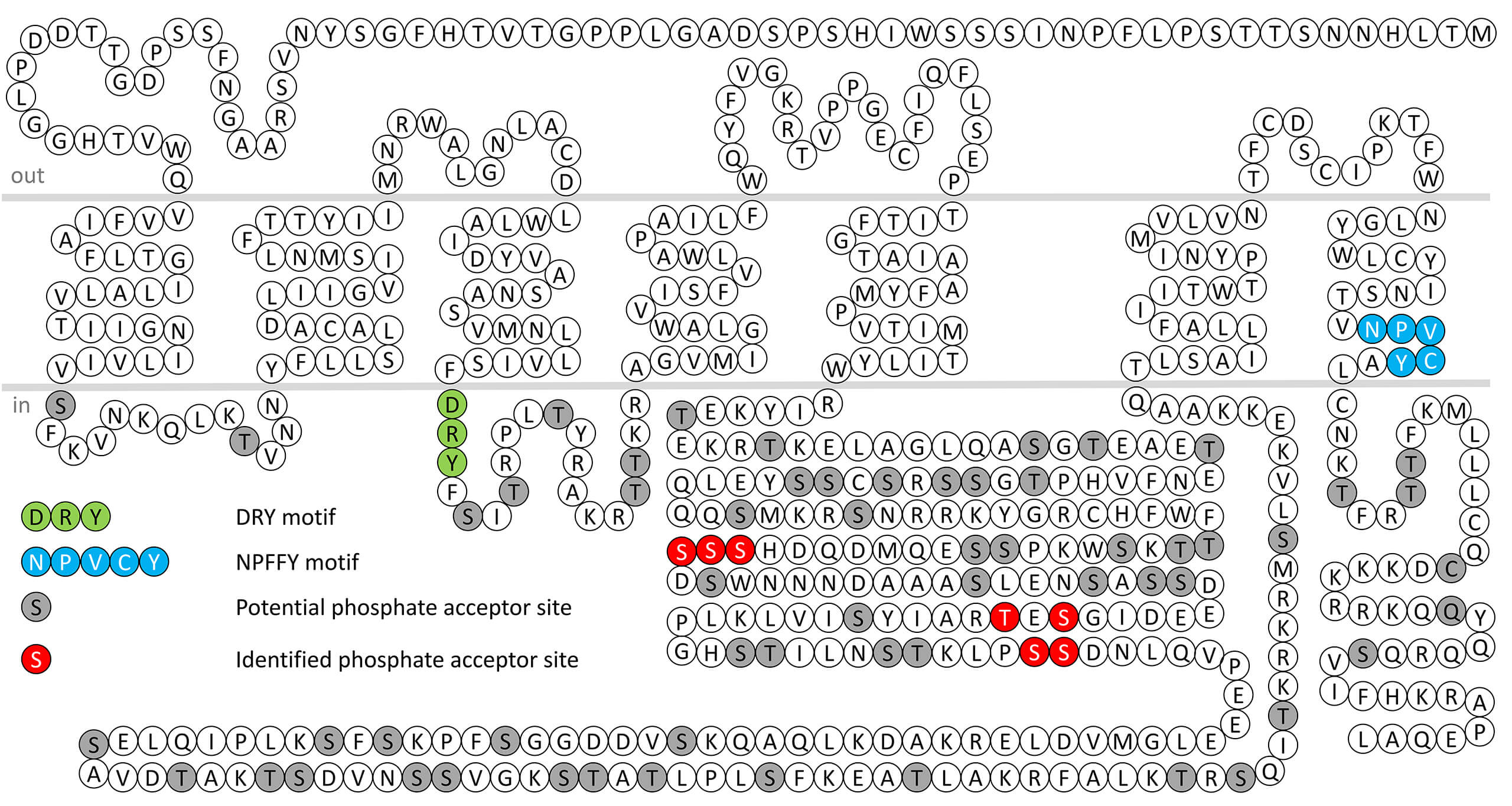
The M3 muscarinic acetylcholine receptor, encoded by the CHRM3 gene, is widely expressed in smooth muscle cells, exocrine glands, vascular endothelium, and various regions of the central nervous system. M3 primarily couples to Gq/11 proteins, activating phospholipase C and increasing intracellular calcium levels, which promotes smooth muscle contraction and glandular secretion. It plays a key role in regulating bronchial tone, gastrointestinal motility, bladder contraction, and salivary secretion. M3 expression is controlled by tissue-specific transcriptional mechanisms and can be modulated by inflammatory signals and receptor desensitization through phosphorylation and internalization. Dysregulation of M3 signaling has been implicated in respiratory diseases, overactive bladder, and metabolic disorders. Several clinically approved drugs target M3, although many also interact with other muscarinic subtypes. For example, tiotropium and glycopyrronium act as long-acting antagonists to reduce bronchoconstriction in chronic obstructive pulmonary disease, while darifenacin is relatively selective for M3 and is used to treat overactive bladder. Ongoing efforts focus on developing more selective M3 modulators to improve therapeutic efficacy and reduce adverse effects. Functionally, M3-muscarinic receptors preferentially couple to Gq/11 proteins. Contraction of smooth muscle, particularly of airway, ileum, iris and bladder, are considered classical muscarinic responses mediated primarily by M3 receptors expressed on the smooth muscle cells. Exocrine secretion, particularly of saliva, and as shown more recently, insulin secretion is also primarily mediated by M3 receptors. M3 receptors are considered drug targets for type 2 diabetes, obesity, and chronic obstructive pulmonary disease. M3 receptor activity is regulated by phosphorylation of serine332/serine333/serine334, serine359/threonine361 and serine385/serine386 in the 3rd intracellular loop. This nomenclature refers to the human M3 but is highly conserved in mice and rats. For more information on M3 receptor pharmacology please refer to the IUPHAR database. For further reading refer to:
Caulfield MP, Birdsall NJ. International Union of Pharmacology. XVII. Classification of muscarinic acetylcholine receptors. Pharmacol Rev. 1998 Jun;50(2):279-90. PMID: 9647869.
Wess J, Eglen RM, Gautam D. Muscarinic acetylcholine receptors: mutant mice provide new insights for drug development. Nat Rev Drug Discov. 2007 Sep;6(9):721-33. doi: 10.1038/nrd2379. PMID: 17762886.
Birdsall NJM, Bradley S, Brown DA, Buckley NJ, Challiss RJ, Christopoulos A, Eglen RM, Ehlert F, Felder CC, Hammer R, Kilbinger HJ, Lambrecht G, Langmead C, Mitchelson F, Mutschler E, Nathanson NM, Schwarz RD, Thal D, Tobin AB, Valant C, Wess J. Acetylcholine receptors (muscarinic) in GtoPdb v.2021.3. IUPHAR/BPS Guide to Pharmacology CITE. 2021; 2021(3).


 pS385/pS386-M3 (phospho-M3 Muscarinic...
  pS359/pT361-M3 (phospho-M3 Muscarinic...
  pS332/pS333/pS334-M3 (phospho-M3 Muscarinic...
  M3 (non-phospho-M3 Muscarinic Acetylcholine...